


Blog
Pharma Automation Investment in Europe, November 2026: Five Projects
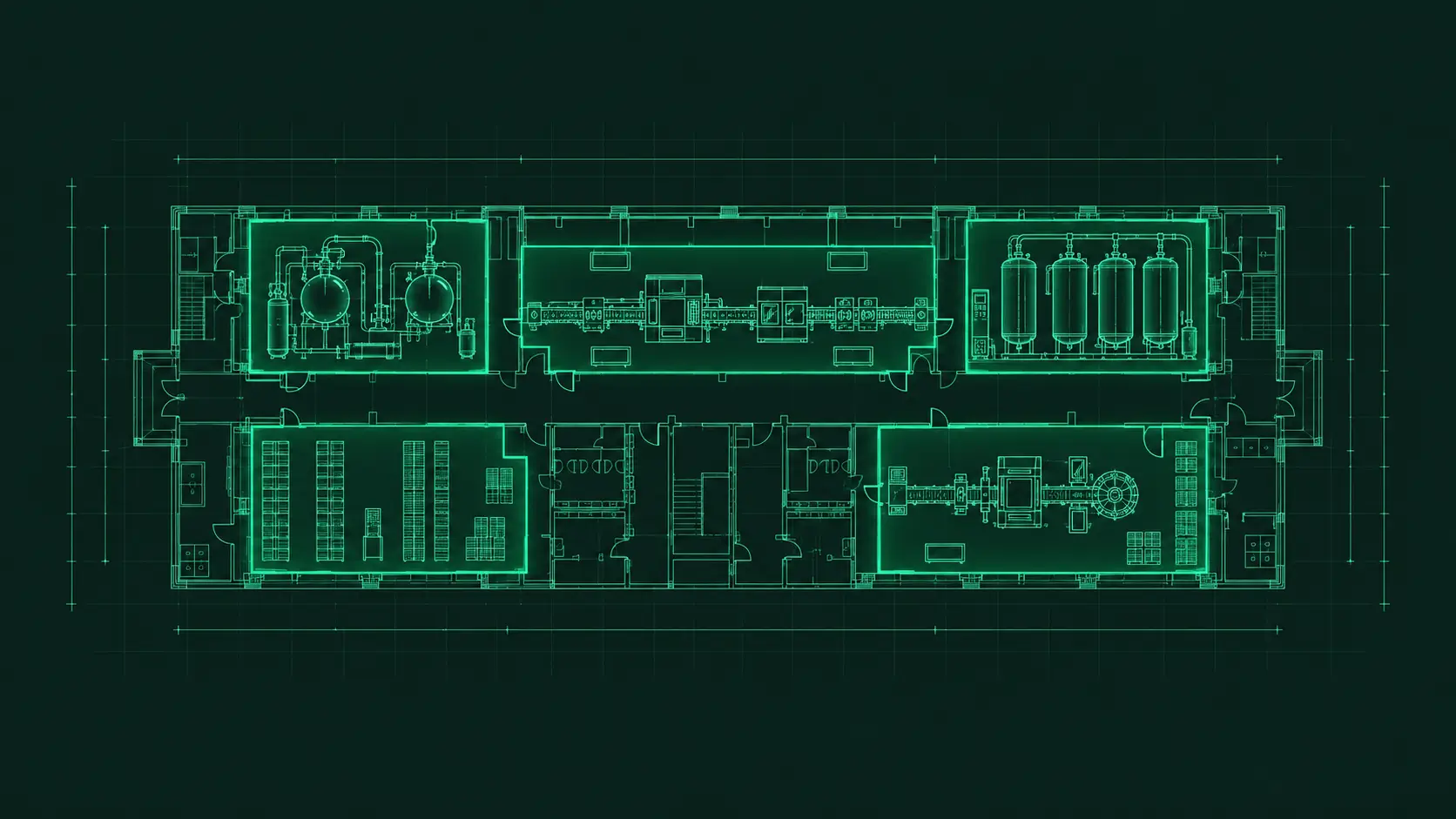
Pharma automation investment this autumn is visible in five European projects, from a plant that opened in September to a laboratory due in 2027. They cover biosimilars, tablets, synthetic molecules, insulin and quality control, and the stage of each project decides where solution providers can come in. Sandoz has opened one plant and has two more under way or planned; Eli Lilly has cleared the local permit to build; Roche laid a foundation stone in September; Sanofi has final EU approval for its state aid; and Novo Nordisk is finishing a laboratory.
Sandoz in Slovenia: biosimilar manufacturing automation
Sandoz opened its Lendava drug substance centre on 29 September. The company says it built the plant around smart automation and process analytical technology, with quality by design from development to full-scale manufacturing.
Two more projects follow: a $300 million drug substance facility in Ljubljana will add 8,000 litres of disposable fed-batch capacity by 2029; a $440 million sterile production site in Brnik is due to open in 2028. Brnik belongs to Sandoz’s Slovenian programme of more than $1.1 billion through 2029, and the Ljubljana facility is additional to it.
Projects like these usually call for bioprocess control and data systems, especially on the drug substance side, and for the integration work that connects process analytics with equipment and batch records.
Eli Lilly’s Katwijk plant: oral solid dose automation as construction begins
On 1 October the Katwijk council voted 28 to 4 to back the permit for a $3 billion Eli Lilly plant that will make oral medicines, including the obesity drug orforglipron. Preparatory work has started, main construction is due this autumn, and production is planned for around 2030.
When it announced the site in November 2025, Lilly named dock-to-dock automation of material flow, paperless manufacturing, process analytical technology and spray-dried dispersion. That scope points suppliers to material handling and to the software and instruments behind paperless production and PAT. Lilly has yet to obtain separate permits for production and wastewater discharge.
Roche builds digital infrastructure for synthetic molecule production in Basel
Roche laid the foundation stone for Building 51 in Basel on 21 September. The Synthetic Molecules Facility covers the new building and the modernisation of Building 50, and is due for completion by 2030 with around 200 employees. The cost is about CHF 790 million, up from the CHF 570 million Roche announced for the two buildings in 2023.
Roche says the facility will combine production technology with digital solutions and AI, and bring research, development and production closer together. Closer ties between development and production put weight on data, which suggests a role for suppliers in process control and data integration, and in analytics that connect development data with plant operations.
Sanofi’s €1.3 billion insulin plant in Frankfurt moves to delivery
On 8 September the European Commission approved €400 million of German state aid for Sanofi. In return, Sanofi must build a new insulin factory at Frankfurt-Höchst and produce at least 1.1 tonnes of insulin a year there until 2042. The investment is around €1.3 billion. Sanofi’s 2024 plan targeted completion in 2029, while the Commission’s deadline is the end of 2032.
The factory replaces existing insulin production buildings on a site that covers the full chain from API to cartridge filling and pen assembly. Sanofi has said the plant will meet the highest quality and automation standards. Demand is likely on the filling and assembly side as much as in API processing.
Quality control laboratory automation at Novo Nordisk in Hillerød
Novo Nordisk is building a 53,000 square metre quality control laboratory in Hillerød, Denmark, for about DKK 2.9 billion. The company calls it its largest investment in advanced quality control to date.
The laboratory will become the central QC hub for Denmark and will consolidate the existing locations. It is designed for current and future GMP requirements and for further capacity expansion, and, according to Novo Nordisk, it will use new technologies and digitalisation to automate quality control processes.
Construction started with the December 2024 announcement and is due to finish in 2027. Bringing several sites into one hub usually means that sample flows and test data run through shared systems, which creates room for laboratory automation and for data systems that scale with production volumes.
AutomaPlus 2026 in Zurich: pharma automation across the manufacturing chain
Sandoz, Eli Lilly, Roche, Sanofi and Novo Nordisk are among the 250+ confirmed participants of AutomaPlus 2026, the Pharmaceutical Automation and Digitalisation Congress (Zurich, 16-17 November). The Congress Partners are GSK, Bachem, Novartis and Boehringer Ingelheim Pharma (as the Technology Partner).
The programme follows the chain from R&D digitalisation through manufacturing to supply chain and covers AI, advanced analytics and data science.
Participants attend the sessions, continue the topics at the exhibition and discuss them further in on-site B2B meetings with no time limit. A personal manager supports each participant from registration until after the congress.
Get the full programme and participants list
*The companies describe their automation plans in general terms, so the statements about likely supplier demand are our assessment, and none is an announced purchase.
FAQ
What is AutomaPlus 2026?
AutomaPlus 2026 is the Pharmaceutical Automation and Digitalisation Congress, bringing together senior decision-makers and specialists from pharmaceutical manufacturers, CMOs, CDMOs, equipment suppliers and technology providers to address the practical challenges of automation, digitalisation and manufacturing excellence in pharma. The programme covers MES, SCADA, LIMS, AI in manufacturing, GMP compliance, quality systems and digital infrastructure for regulated environments.
When and where does AutomaPlus 2026 take place?
AutomaPlus 2026 takes place on 16-17 November 2026 in Zurich, Switzerland, across two days of sessions, roundtables, an exhibition and structured B2B meetings with participants from the pharmaceutical value chain.
Who attends AutomaPlus 2026?
AutomaPlus 2026 is attended by C-level executives, heads of automation, digitalisation leads, manufacturing directors, quality and engineering specialists from pharmaceutical operators, CMOs and CDMOs, alongside equipment manufacturers, system integrators and technology providers serving the regulated pharma environment. The Congress operates on a closed-door model to ensure a focused professional environment of end-users, licensors and solution providers.
How is AutomaPlus different from an open pharma industry event?
AutomaPlus 2026 uses a closed-door format: attendance is limited to verified pharma professionals. Open conferences sell tickets to any visitor, including students and people who came just to look around. The closed format keeps conversations focused on those who hold budgets and technical mandates for the topics on the agenda.
How do companies participate in AutomaPlus 2026?
Companies participate in AutomaPlus 2026 as delegates, sponsors, exhibitors or speakers. Participation details are available on request.
Where are pharma manufacturers investing in automation right now?
Pharma manufacturers are investing in automation at five European projects: Sandoz in Slovenia, Eli Lilly in Katwijk, Roche in Basel, Sanofi in Frankfurt and Novo Nordisk in Hillerød. Sandoz’s Lendava plant opened on 29 September, Lilly’s Katwijk plant has cleared the local permit to build, Roche laid a foundation stone on 21 September, Sanofi has EU state-aid approval, and Novo Nordisk’s quality control laboratory is due in 2027.