


Blog
Automated Quality Control in Pharma: Biosimilars, Nitrosamine Risk and EU GMP Annex 22
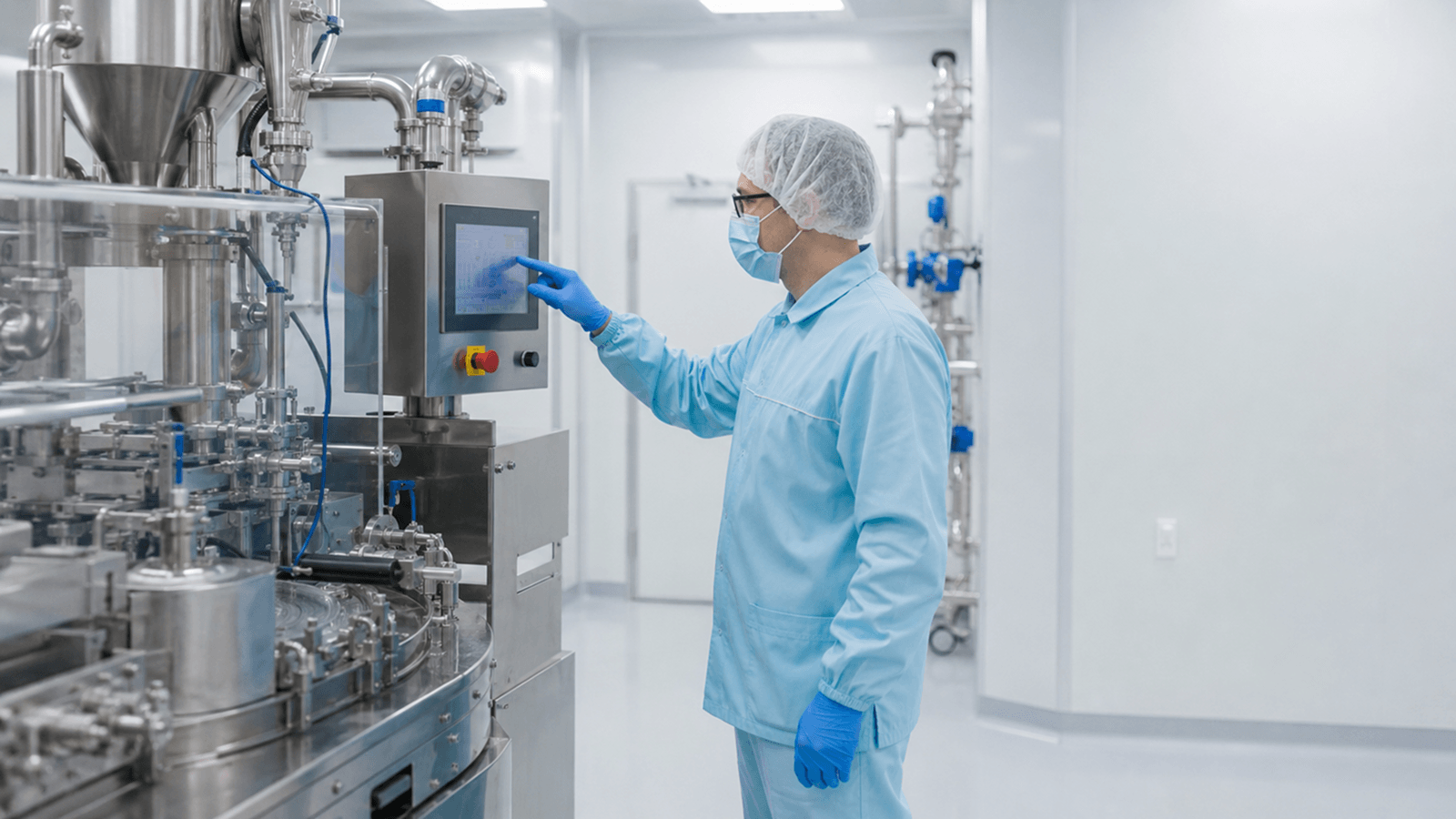
Automated quality control is turning from an efficiency project into regulatory infrastructure. Three developments push in the same direction at once: FDA and EMA now weigh analytical comparability more heavily in biosimilar review, recurring nitrosamine recalls show release testing alone misses long-term risk, and the draft EU GMP Annex 22 sets rules for how AI can support QC decisions. Each raises the same question for manufacturing and QA teams: can your lab produce evidence that is sensitive, scalable and audit-ready when the analytical result itself now carries more of the regulatory decision.
Biosimilar Analytical Testing: Why QC Now Carries More Regulatory Weight
On 29 October 2025, the FDA proposed that comparative efficacy studies may not be needed for many therapeutic protein biosimilars when analytical and functional data already demonstrate structural and functional equivalence. The FDA's Revision 4 Q&A, issued in March 2026, reduced bridging requirements for a non-US-licensed comparator. EMA adopted a parallel approach the same month, allowing a tailored clinical programme when analytical, functional and PK evidence resolve remaining uncertainty.
The practical consequence: as biologic patents expire and more biosimilar candidates enter development, a weak analytical method or an unexplained chromatographic peak carries direct regulatory exposure. This shifts workload from clinical to analytical teams, and analytical teams are the ones running into scale limits first.
Multi-Attribute Method: The Automation Requirements Behind It
Multi-Attribute Method (MAM), based on LC-MS peptide mapping, illustrates the problem. MAM monitors multiple quality attributes in parallel and uses new-peak detection to flag unexpected changes, replacing several conventional assays at once. That density of data cannot go through manual peak-by-peak review.
Three things need to be in place before MAM scales:
-
predefined acceptance criteria tied to a locked, version-controlled method (so a peak review doesn't depend on which analyst is on shift);
-
automated data processing from instrument to review, not spreadsheet-mediated;
-
review by exception, where an analyst only opens a full investigation when a result falls outside defined limits, with the rule for what counts as an exception documented and owned by QA, not decided case by case.
Without these three elements, MAM adds data volume without adding control.
Nitrosamine Testing and Control Beyond Product Release
The 2026 duloxetine recalls make the limits of release-only testing concrete. Several manufacturers recalled products after N-nitroso-duloxetine exceeded the FDA-recommended limit; for Ajanta Pharma, the issue surfaced during 12- and 18-month stability monitoring, well after release. Nitrosamine risk shifts with API route, supplier, recycled solvents, excipient nitrite levels, packaging and storage conditions, so a single release test cannot catch it.

The fix is upstream trending: track nitrite content in incoming excipients, solvent recycling cycles and storage humidity/temperature deviations as leading indicators, and combine them with high-sensitivity nitrosamine assays trended batch to batch and across stability intervals, using statistical control limits rather than pass/fail thresholds alone. PAT tools can feed this trend but cannot replace the stability programme – they narrow where to look before a result turns into a recall.
Manual QC Bottlenecks in Pharmaceutical Manufacturing
MAM datasets and nitrosamine trend data fail for the same underlying reason: instrument results that move through manual scheduling, transcription and analyst-to-QA handoffs across disconnected LIMS, MES, ELN and QMS systems. Re-entering a MAM result into a spreadsheet for trending, or documenting a nitrosamine reintegration outside the primary system, creates the same failure mode twice: a broken audit trail and a delayed signal. Fixing this connectivity is the prerequisite both cases share, before either automation effort can scale.
At AUTOMA+ 2026, these topics will be discussed in detail – request full agenda
Validating the AI Layer: Annex 22, CSA and Data Integrity
Two more requirements now shape how QC systems can look under inspection.
First, data integrity: the FDA's updated pre-approval inspection programme, effective 10 August 2026, adds an explicit audit of raw data behind CMC submissions.

Automation only satisfies this when data moves directly from instrument to controlled system, with electronic signatures, audit trails and a documented reason for every override, meeting ALCOA+ and 21 CFR Part 11.
Second, the draft EU GMP Annex 22, published for consultation alongside revised Annex 11 and Chapter 4 in July 2025, states that dynamic models which continue learning during use should not run in critical GMP applications. The safest design keeps a validated, version-locked model for functions like deviation classification or release support, with dynamic or generative tools kept outside the decision path and limited to non-critical, human-reviewed assistance.
Risk-based Computer Software Assurance becomes the connecting method: instead of validating every function equally, CSA focuses testing depth on the functions that affect patient safety and product quality, which is exactly the boundary Annex 22 draws between locked decision models and assistive tools. Framing model validation through CSA gives QA a documented, risk-proportionate answer to "why was this function tested this way," which is what both an FDA inspector and an Annex 22 assessment will ask.
Building Automated QC in Pharma: Priorities and Ownership
None of this requires automating the whole lab at once. Three priorities follow directly from the cases above:
-
For MAM and other high-density methods, lock the method version, define acceptance rules before deployment and route instrument data straight into review software, removing the spreadsheet step.
-
For nitrosamine and other stability-linked risks, connect upstream material and process data to trend dashboards spanning the full stability interval, not just the release result.
-
For any AI-supported function, decide upfront which outputs are deterministic and which are advisory, document that boundary against Annex 22 and CSA principles, and assign a named owner, typically QA working jointly with digital or automation engineering rather than either function alone, since a locked decision model still needs someone accountable for its change control.
Where This Gets Discussed: AUTOMA+ 2026, 16-17 November, Zurich
The common lesson from biosimilars, nitrosamines and the 2026 regulatory agenda is that analytical control is becoming continuous evidence infrastructure. The question pharma manufacturers are facing now is whether their present systems can produce sensitive, scalable and inspection-ready evidence when the analytical result itself carries more of the regulatory decision.
That is the discussion AUTOMA+ brings into focus: which quality decisions can be automated, how those systems should be validated and how manufacturers can scale analytical control without losing human accountability.
Discuss automated QC at AUTOMA+ 2026
FAQ
What is AUTOMA+ 2026?
AUTOMA+ 2026 is the Pharmaceutical Automation and Digitalisation Congress, bringing together senior decision-makers and specialists from pharmaceutical manufacturers, CMOs, CDMOs, equipment suppliers and technology providers to address the practical challenges of automation, digitalisation and manufacturing excellence in pharma. The programme covers MES, SCADA, LIMS, AI in manufacturing, GMP compliance, quality systems and digital infrastructure for regulated environments.
When and where does AUTOMA+ 2026 take place?
AUTOMA+ 2026 takes place on 16-17 November 2026 in Zurich, Switzerland, across two days of sessions, roundtables, an exhibition and structured B2B meetings with participants from the pharmaceutical value chain.
Who attends AUTOMA+ 2026?
AUTOMA+ 2026 is attended by C-level executives, heads of automation, digitalisation leads, manufacturing directors, quality and engineering specialists from pharmaceutical operators, CMOs and CDMOs, alongside equipment manufacturers, system integrators and technology providers serving the regulated pharma environment. The congress operates on a closed-door model to ensure a focused professional environment of end-users, licensors and solution providers.
How do companies participate in AUTOMA+ 2026?
Companies participate in AUTOMA+ 2026 as delegates, sponsors, exhibitors or speakers. Participation details are available on request.
Why isn't release testing enough to catch nitrosamine risk?
Nitrosamine levels can form or increase after a product passes release, driven by API route, recycled solvents, excipient nitrite content, packaging or storage conditions over time. The 2026 duloxetine recalls surfaced during 12- and 18-month stability testing, not at release. Catching this requires trending upstream material and process data alongside stability-interval testing, not a single release-point check.
Why can't Multi-Attribute Method data be reviewed manually?
MAM generates dense, multi-attribute datasets from LC-MS peptide mapping, including new-peak detection flags across every batch. Reviewing this chromatogram by chromatogram doesn't scale and increases the chance of inconsistent judgment calls between analysts. It requires predefined acceptance criteria, a locked method version and automated data flow into review-by-exception workflows so analysts only investigate results that fall outside set limits.
Can AI make quality control decisions in pharma manufacturing?
AI can support QC decisions, but draft EU GMP Annex 22 restricts which models can drive them. Static, version-locked models may support functions like deviation classification or release support, while dynamic models that keep learning during use should stay outside the critical decision path. Any AI output feeding a GMP decision needs documented validation, defined acceptance criteria and human review.
References
-
FDA’s draft guidance https://www.fda.gov/regulatory-information/search-fda-guidance-documents/scientific-considerations-demonstrating-biosimilarity-reference-product-updated-recommendations
-
FDA Revision 4 https://www.fda.gov/news-events/press-announcements/fda-takes-further-steps-streamline-biosimilar-development-and-make-medicines-more-affordable
-
EMA reflection paper https://www.ema.europa.eu/en/reflection-paper-tailored-clinical-approach-biosimilar-development
-
MAM development study https://pubmed.ncbi.nlm.nih.gov/41084101/
-
New-peak detection study https://pubmed.ncbi.nlm.nih.gov/36802331/
-
Official Ajanta recall notice https://www.pharmacy.ca.gov/about/recall_alerts/050426_ajanta.pdf
-
ICH Q9(R1) concept paper https://database.ich.org/sites/default/files/Q9-R1_Concept%20Paper_2020_1026.pdf
-
FDA warning-letter database https://www.fda.gov/inspections-compliance-enforcement-and-criminal-investigations/compliance-actions-and-activities/warning-letters
-
FDA Compliance Program 7346.832 https://www.fda.gov/media/193382/download
-
FDA Part 11 guidance https://www.fda.gov/regulatory-information/search-fda-guidance-documents/part-11-electronic-records-electronic-signatures-scope-and-application
-
European Commission consultation https://health.ec.europa.eu/consultations/stakeholders-consultation-eudralex-volume-4-good-manufacturing-practice-guidelines-chapter-4-annex_en