


Blog
Smart Factory Skills Gap in Pharma – Who Runs the Automated Line and How Europe and Asia Are Solving It Differently
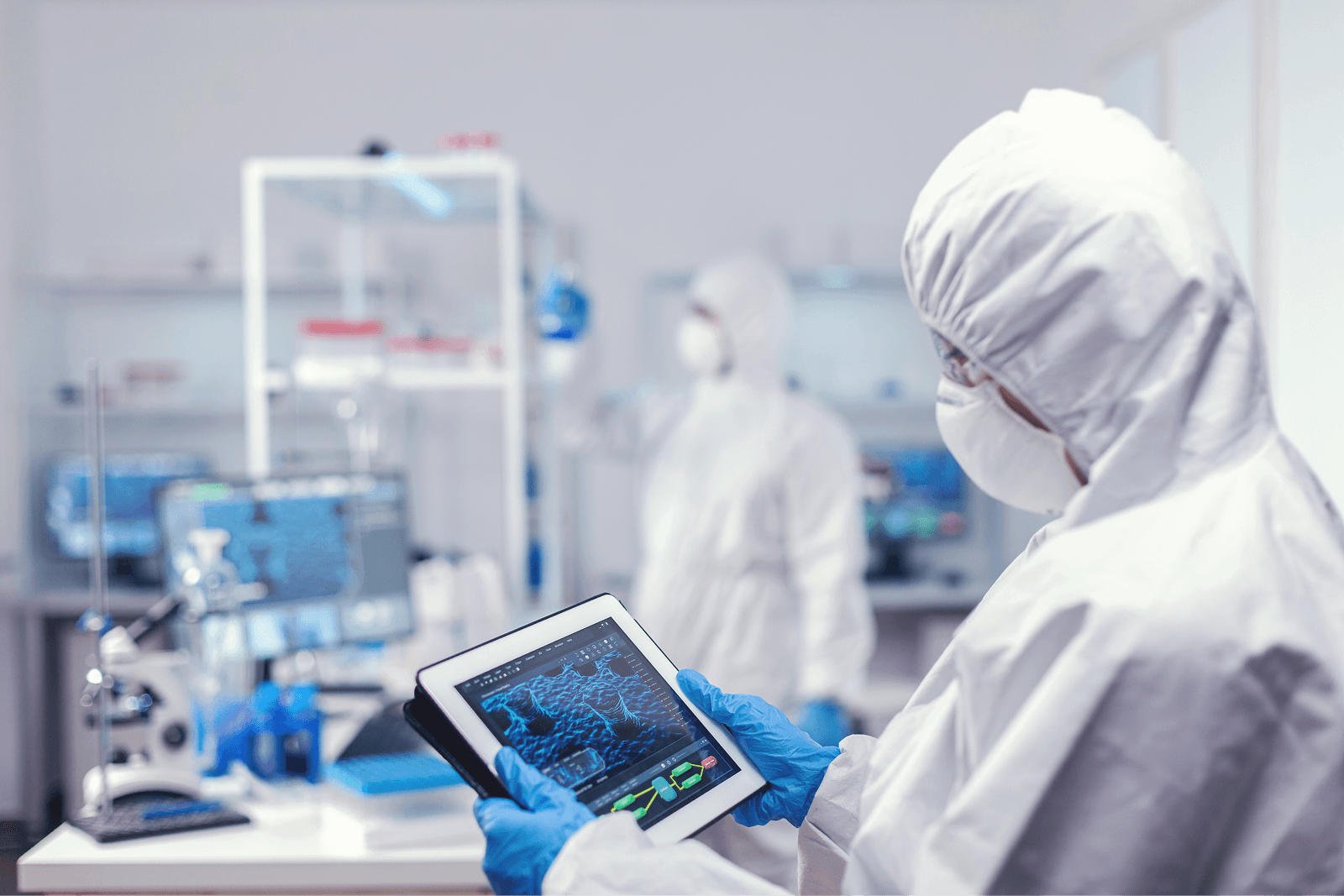 Image by DC Studio on Magnific
Eight in ten pharmaceutical manufacturers report a mismatch between what their workforce can do and what their digital production environment now requires, according to ISPE Pharma 4.0 surveys. The technology is largely deployed: MES platforms, IoT sensors, AI process monitoring, digital batch records. What's missing is the person who can run it under GMP, own the decisions it generates and pass a regulatory inspection on the way out. The problem exists both in Europe and Asia, but the regulatory accountability requirement makes the European version of this challenge structurally harder.
Why Pharma Digital Manufacturing Has a Workforce Problem in 2026
85% of pharmaceutical companies are already running digital manufacturing initiatives, so the gap isn't in commitment. The main barriers to AI adoption are regulatory and organisational, specifically the shortage of hybrid profiles combining quality, engineering and data expertise.
That framing matters for how you address it. Instead of looking for more data scientists, companies are now looking for people who can sit at the intersection of regulated manufacturing and algorithmic decision support. Those people are currently in short supply across the industry, and the cost of that shortage is not abstract. Failed AI projects require repeated piloting. Delayed deployments extend the period when manual processes carry the same labour cost without the efficiency gain. A study cited by McKinsey puts the value gap in biopharma operations at $4-7 billion annually in unrealised gen AI opportunity – the primary reason that value isn't being captured is not the technology, it is the people and governance structures needed to deploy it responsibly under GMP.
Who Signs Off on AI Decisions?
The automated line generates an alert, the AI model produces a recommendation, and then someone needs to act – someone who can read the output of a system they didn't design, apply GMP judgment to it and be accountable for the outcome.
Both the regulatory frameworks and enforcement reality are clear on this point. The draft EU GMP Annex 22, published in July 2025 and expected to be finalised in mid-2026, states that a competent person remains accountable for AI-supported decisions, with oversight scaled to risk. Every model output must carry a confidence score, outputs below a defined threshold must route to human review.
The same Annex 22 draft draws a boundary: only static, deterministic models – systems that produce identical outputs from identical inputs and do not adapt after deployment – are currently permitted in GMP-critical applications. Dynamic models, generative AI and large language models are explicitly excluded from GMP-critical use under the draft as written. This is directly relevant to organisations evaluating gen AI tools for deviation management, batch release support or quality prediction: the advisory, human-in-the-loop use cases remain viable, but any positioning of a gen AI system as a GMP-critical decision driver runs ahead of what Annex 22 currently allows.

FDA's posture is identical: AI may inform, recommend and flag, but does not own accountability. In April 2026, FDA issued a warning letter after a firm used AI agents to generate GMP documents without qualified review – the Quality Unit's accountability is not delegable to any tool.
The Hybrid GMP-Data Profile Pharma Needs and Struggles to Hire
The scarcest skill in pharmaceutical manufacturing right now is not AI expertise. It is the intersection: a professional who understands regulated production at the process level, knows what GMP requires at each decision point and can work fluently with algorithmic outputs and data systems.
QA Resources, in a February 2026 analysis of the QA/QC talent market, noted that the shift towards digital quality systems has created demand for candidates who bridge quality and technology – an area where skills remain chronically short. The same analysis flagged a structural complication: pharma is competing for this profile against tech companies, medical device firms and biotech startups, all seeking identical competencies. A separate ISPE measure finds that 80% of pharmaceutical manufacturers report a mismatch between current staff and digital requirements – a figure that has not improved materially despite years of digital investment.
The role titles emerging in 2026 – digital manufacturing engineer, quality analytics officer, process automation specialist – reflect what the work actually requires. Building them internally and deliberately is faster than waiting for the external market to supply them.
Three Approaches That Are Building GMP-Digital Capability in Practice
Three approaches characterise the organisations making measurable progress:
- Hybrid role definition tied to a live project. Leading companies are building quality-engineering-data profiles around concrete implementations: MES rollouts, continued process verification, digital QMS deployment. The role gets defined by an operational need, not a speculative job description. BioVectra has taken a parallel route, collaborating with local universities to develop graduates who enter with GMP context alongside data literacy, rather than trying to retrofit one onto the other after hiring.
- Competency centers that concentrate GMP-digital expertise centrally rather than distributing it across sites and hoping it develops evenly. A central team owns model validation, supports site deployments and carries the regulatory interface.
- Phased responsibility transfer: AI recommends, the qualified human decides, every decision is documented. The model confidence threshold determines when human intervention is mandatory. This approach is also the correct path under Annex 22 for any organisation building towards broader AI deployment – the advisory phase generates the validation evidence the regulation requires, while simultaneously building the operator literacy that makes eventual expansion viable. Novo Nordisk's April 2026 partnership with OpenAI includes an explicit workforce component – upskilling its global staff in AI literacy across manufacturing and operations, with full integration targeted by end of 2026 – a signal that the skills question is being treated as capital investment.
Guillaume Carbonneau, VP Operational Data Insights at Novo Nordisk, is joining AUTOMA+ 2026 as a speaker - explore the full business programme.
How China and Europe Handle Pharma AI Manufacturing Skills Differently
The skills gap is not uniquely European – Asian pharmaceutical manufacturers, including some of the largest CDMOs in the world, face the same fundamental challenge: technology deployment has outpaced the workforce capable of operating it under regulated conditions. What differs is the regulatory frame in which that challenge sits, and the policy infrastructure supporting the response.
China's smart manufacturing programme runs at a scale that European operators rarely encounter across Chinese manufacturing broadly. By 2025, China had built more than 30,000 smart factories across its industrial base, with 1,200 classified as advanced-level facilities by its Ministry of Industry and Information Technology. Chinese manufacturers accounted for approximately 54% of all new industrial robot installations globally in 2024 and 2025. The state policy behind this – Made in China 2025, the New Generation AI Development Plan and the 14th Five-Year Plan for intelligent manufacturing – has funded both infrastructure deployment and national-level training programmes in a coordinated way that European companies largely have to replicate through their own corporate strategies.
The gap between traditional process knowledge and data system fluency is real in Hangzhou and Suzhou as it is in Basel and Zurich. The critical difference is the regulatory accountability requirement that applies when a line operates under GMP.
In Europe and the US, a qualified person must remain accountable for every GMP-critical AI-assisted decision – documented, auditable and defensible to an inspector. Annex 22 makes this explicit. China's NMPA updated its GMP for medical devices in November 2025, drawing explicitly on EU MDR and FDA standards, signalling regulatory convergence. But no Chinese equivalent of Annex 22 yet requires a confidence-scored AI output to be routed to a named qualified person before action. This means domestic Chinese manufacturers can deploy AI into production faster, without the same validation and accountability infrastructure that a European or US-regulated facility requires.
For export-oriented Chinese CDMOs and manufacturers supplying the EU or US markets, the regulatory situation is identical to their European counterparts. Annex 22 and 21 CFR Part 11 apply regardless of where the factory is located if the output is sold into those markets. Those organisations are building the same hybrid GMP-digital profiles and competing for the same scarce talent as European operators.
European manufacturing and HR leaders are not behind China in solving this problem. They are solving a more demanding version of it, with explicit accountability requirements, defined validation obligations and regulatory inspection as the consequence of getting it wrong. Building that workforce capability means building a compliance infrastructure that becomes a competitive differentiator in regulated markets, and that domestic Chinese manufacturers will need to replicate as their regulatory environment converges with international standards.
What FDA, EMA and Annex 22 Require Before the Inspector Arrives
The frameworks are converging on a short timeline. Annex 22 will be the EU's first GMP-specific text on AI in manufacturing, and its finalisation in mid-2026 means documented accountability structures need to exist before the inspection, not be built in response to it. ISPE published the GAMP Guide for AI in GxP-Regulated Systems in July 2025. FDA and EMA jointly published Good AI Practice principles in January 2026 – the first joint statement from both agencies.

What these documents consistently require in practice: a named, trained person accountable for each AI-assisted GMP decision, documented training specific to the AI application in use (not general digital literacy), a validation package built from live production data rather than synthetic test sets, defined confidence thresholds with documented escalation paths and change control procedures for model updates. For HR leaders, this translates directly into role definitions, training curricula and competency assessments that need to exist as GMP documents. For manufacturing heads, it means the accountability question needs a named answer before the system goes live, not during an inspection.
Pharma AI Skills and Smart Manufacturing at AUTOMA+ 2026: Zurich, 16-17 November
AUTOMA+ 2026 addresses operational questions that cannot wait: how to define hybrid GMP-digital roles that satisfy Annex 22's accountability and training requirements, how to structure phased responsibility transfer that generates valid documentation, how to build a competency architecture that scales across sites without recreating it from scratch at each one.
The programme gathers manufacturing heads, quality directors, digitalisation leads and CDMOs for sessions grounded in what has actually been deployed in regulated environments. Speakers address the organisational dimension directly: how to break the barriers between the people who understand GMP and the people who understand data, so that neither group ends up making decisions they are not qualified to make.
AUTOMA+ 2026 is where practitioners working through these challenges compare approaches in detail – register for AUTOMA+ 2026.
FAQ
What is AUTOMA+ 2026?
AUTOMA+ 2026 is the Pharmaceutical Automation and Digitalisation Congress, bringing together senior decision-makers and specialists from pharmaceutical manufacturers, CMOs, CDMOs, equipment suppliers and technology providers to address the practical challenges of automation, digitalisation and manufacturing excellence in pharma. The programme covers MES, SCADA, LIMS, AI in manufacturing, GMP compliance, quality systems and digital infrastructure for regulated environments.
When and where does AUTOMA+ 2026 take place?
AUTOMA+ 2026 takes place on 16-17 November 2026 in Zurich, Switzerland, across two days of sessions, roundtables, an exhibition and structured B2B meetings with participants from the pharmaceutical value chain.
Who attends AUTOMA+ 2026?
AUTOMA+ 2026 is attended by C-level executives, heads of automation, digitalisation leads, manufacturing directors, quality and engineering specialists from pharmaceutical operators, CMOs and CDMOs, alongside equipment manufacturers, system integrators and technology providers serving the regulated pharma environment. The congress operates on a closed-door model to ensure a focused professional environment of end-users, licensors and solution providers.
How do companies participate in AUTOMA+ 2026?
Companies participate in AUTOMA+ 2026 as delegates, sponsors, exhibitors or speakers. Participation details are available on request.
Why can't pharma find people to run AI-assisted production lines?
Pharma lacks professionals who combine GMP knowledge with data literacy – the two skills that rarely coexist. GMP specialists understand regulated production, data scientists understand algorithms. ISPE surveys find that 80% of pharmaceutical manufacturers report a mismatch between current staff and digital requirements. Tech companies, medical device firms and biotech startups compete for the same hybrid profile, making external hiring unreliable.
Under GMP, who is accountable for decisions made by an AI system on the production floor?
A qualified human remains accountable for every GMP-critical AI decision, the system cannot own it. EU GMP Annex 22 (draft, July 2025) requires a competent person to review AI-supported outputs, with oversight scaled to risk, and restricts GMP-critical applications to static deterministic models – generative AI and LLMs are explicitly excluded. FDA confirmed the accountability principle in an April 2026 warning letter: using AI to generate GMP documents without qualified review violates 21 CFR 211.22(c). The Quality Unit's accountability is not delegable to any tool.
Do Chinese and Asian pharma manufacturers face the same smart factory skills gap as European ones?
The skills gap exists across Asia too, but the regulatory accountability requirement is structurally different. Chinese domestic manufacturers can deploy AI faster because no NMPA equivalent of Annex 22 yet mandates that a named qualified person review and sign off on every AI-critical decision. For Chinese CDMOs and manufacturers exporting to EU or US markets, the situation is identical to Europe – Annex 22 and 21 CFR Part 11 apply regardless of factory location. European operators solving this problem properly are building a compliance capability that becomes a competitive differentiator in regulated export markets.
References:
-
ISPE Pharma 4.0™ surveys https://ispe.org/initiatives/pharma-40
-
EU GMP Annex 22 «Artificial Intelligence» https://health.ec.europa.eu/document/download/5f38a92d-bb8e-4264-8898-ea076e926db6_en
-
FDA warning letter to Purolea Cosmetics Lab https://www.pharmtech.com/view/what-fda-s-ai-warning-letter-tells-us-about-gmp-accountability
-
QA Resources, «The 2026 QA/QC Talent Gap» https://qaresources.com/the-2026-qa-qc-talent-gap-skills-pharma-employers-are-prioritising/
-
IMJ Health Blog, June 2026 https://imjhealth.org/blog/pharmaceutical-manufacturing-2025-2026-key-research-trends-digital-innovation-future-opportunities
-
Novo Nordisk & OpenAI partnership https://www.biospace.com/press-releases/novo-nordisk-and-openai-partner-to-transform-how-medicines-are-discovered-and-delivered
-
ISPE GAMP Guide for AI in GxP-Regulated Systems https://ispe.org/publications/guidance-documents/gamp-guide-ai-gxp-regulated-systems
-
FDA + EMA, Good AI Practice Principles https://www.ema.europa.eu/en/news/ema-and-fda-publish-joint-principles-good-ai-practice-medicines-lifecycle
-
China Ministry of Industry and Information Technology https://zignify.net/blog/rise-of-smart-industry-china/
-
China NMPA, revised GMP for Medical Devices https://chinameddevice.com/china-nmpa-good-manufacturing-practice-gmp/